The case of New York City

New York Skyline - Mister Mourao
Equity is a widely used term, which is increasingly influencing urban policies and planning guidelines to promote more prosperous cities. While the importance of equity is widely recognized, the meaning of equity in urban development has not been very clearly defined. The paper aims to explore a more precise definition of equity within the urban context and explore a methodological framework of analysis that can support strategic urban planning and policy making. Conceiving ‘urban equity’ as the fair distribution of material and non material benefits and accessibility as its fundamental measure, the paper will investigate the housing supply of New York City through three accessibility indicators: affordability, proximity and safety. The severe crisis of affordable housing shortage that the city is currently facing can only be addressed through the recognition of the great level of diversity that characterized each neighborhood and the prioritization of specific and tailored interventions in the most critical areas of the city.
The need for an Equity Oriented Development
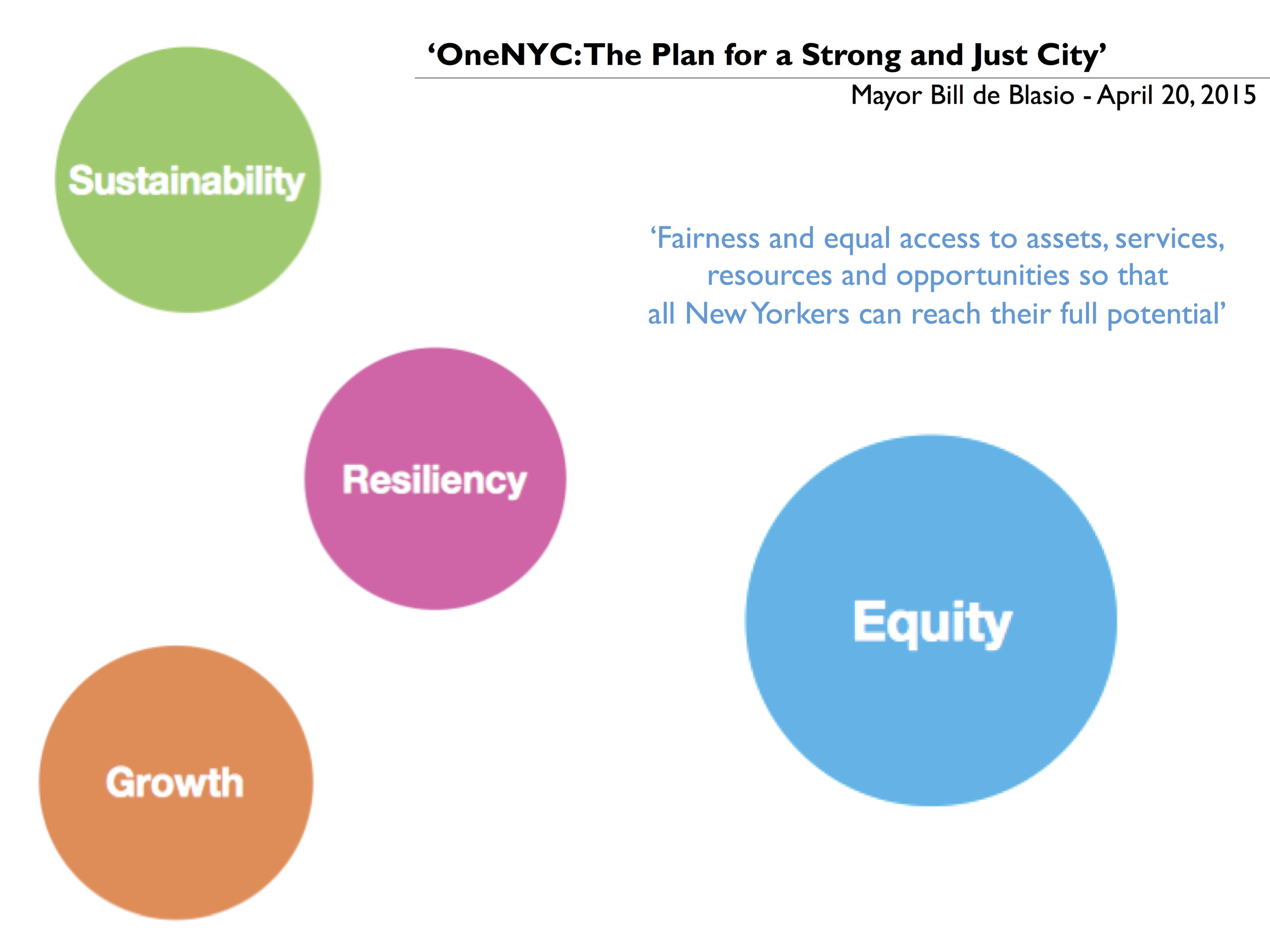
New York City’s Mayor Bill de Blasio on April 20th, 2015 launched ‘One New York: The Plan for a Strong and Just City’ which is divided into four categories: growth, equity, sustainability and resiliency. Equity is an explicit guiding principle of the new plan and it is supposed to guide the city planning, policy-making and governing strategies to ensure a more dynamic and inclusive economy, more affordable housing and more resilient infrastructure. (Giambusso, Goldenberg 2015) The Mayor recognized that a widening opportunity gap is threatening the city’s future: growing income inequalities, obstacle to job mobility and a crisis of housing affordability are impacting on long term growth. (NYCG 2015)
The importance of equity
Equity and equality are similar concepts that are too often used without recognition of differences. Equity is a concept of justice, which connotes “fairness”, while equality is a human rights principle, that defines all the individuals as the same. Equity refers to the qualities of justness, fairness, impartiality and even handedness, the objective of equity is to give people what they need to enjoy full, healthy lives. Equality, in contrast is about equal sharing and exact division and aims to ensure that everyone gets the same things in order to enjoy full, healthy lives, but it can only work if everyone starts from the same place and needs the same things. By its vary nature equity is harder to measure, because based on value judgment, while equality can be objectively assessed. (Moreno 2014, 11)
It is recognized that equity has a long-term positive effect on growth, poverty reduction and social cohesion, but, although it is gaining more attention in development discourse, equity still remains less relevant than other issues such as efficiency and economic growth.
Starting from the conception of equity in the development process in order to gradually achieve equality of results and using the definition of equity, according to Rawls and Fainstein theories, urban equity could be then considered as ‘the fair distribution of material and non material benefits at the city level’. Achieving urban equity means that no one should be penalized for where they live and that public goods and basic services should be available to everyone and distributed according to needs. Equity can be considered achieved only when complemented by Harvey’s ‘right to the city’ from all the urban inhabitants, which means that an equal level of accessibility to the city and to its benefits is provided to all the citizens.
“A new way of thinking about equity and equality would be to interpret the two concepts within the context of “results” and the dimensions of a “process”. With these new definitions, both equality and equity become important for development, but each must be used in a more appropriate way, according to the various meanings they acquire in diverse contexts. For example, while equality plays a crucial role in a human rights-based approach, equity is also required in the development process in order to gradually achieve equality of results.”
Equity: an urban development strategy
Accessibility is the fundamental measure of equity and the built environment can have a strong impact on the extent and nature of accessibility of a place.
Decent housing, education, health, public and green spaces are some of the basic benefits of everyday life to which residents and users need equal access. Some of the accessibility aspects are directly linked to the built environment, either through the actual provision and distribution of services and facilities or by the means of accessing them, like in the example of public transport. Others are indirectly linked: for example, access to decent housing may be also related to the aspect of affordability that may prohibit residents from living in, and moving out of, different neighborhoods and areas (Dempsey 2009, 292). Geographically, “inequity may manifest itself as areas of deprivation, which may have poorer living environments and reduced access to a range of public services and facilities for residents than other areas” (Dempsey 2009, 292).

Accessibility Indicators - Housing
As a fundamental measure of equity, the level of accessibility of New York City, will be analyzed through three main indicators: affordability, proximity and safety, that illustrate the relationships between the primary goals of any kind of project: cost, time and quality. Invoking the ‘quality triangle’, the affordability of New York housing, the level of proximity to the workplace and the safety of the each neighborhood will be analyzed through a statistical research to show how the three indicators are interrelated and vary to each other.
Affordability
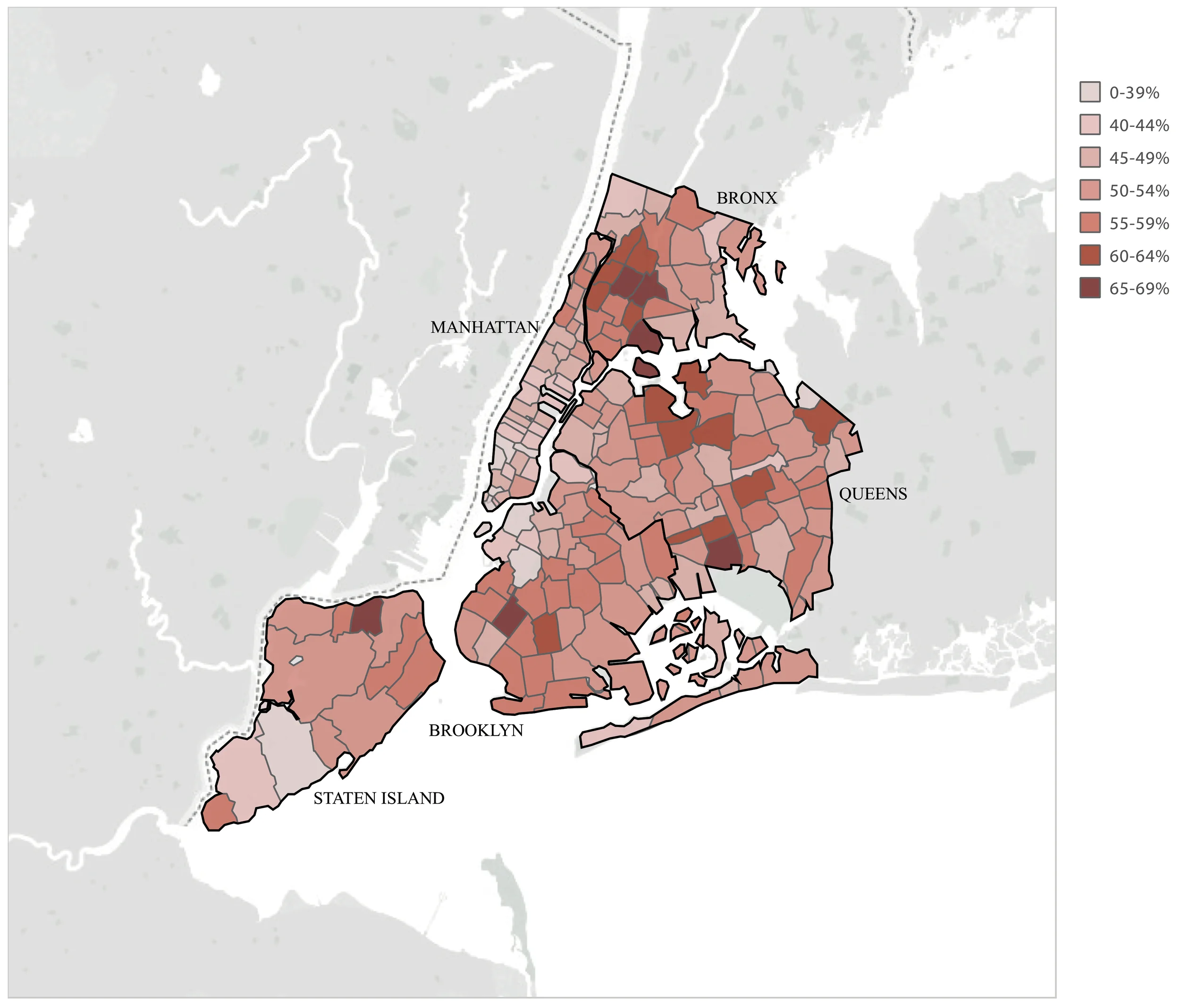
Affordability. Percentage of Rent-Burdened Households - Source: 2009-2013 American Community Survey
Looking at the data of the census from the 2009-2013 American Community Survey, it is possible to notice that the population is homogeneously divided between four income group. Such a picture of New York City population suggests that a reasonable level of income diversity, with high probability reflects a good level of diversity between the inhabitants of the city. In fact, New York City can be considered one of the world’s leading cities in large part because of its unparalleled diversity. Apparently, with over two million New York City household renters - roughly two-thirds of all city households - the city seems to not being able to provide such a great variety of rental options. In fact, despite the great city’s diversity, the figure that results by comparing the Gross Rent as a Percentage of household Income (GRAPI) to the income of every New Yorker paying rent shows that half of the renter households (52 percent) of New York, is rent-burdened. It means that the rent-to-income ratio it is not affordable and the majority of New York households are paying more than the 30 percent of their gross annual income on rent and utilities.
Proximity
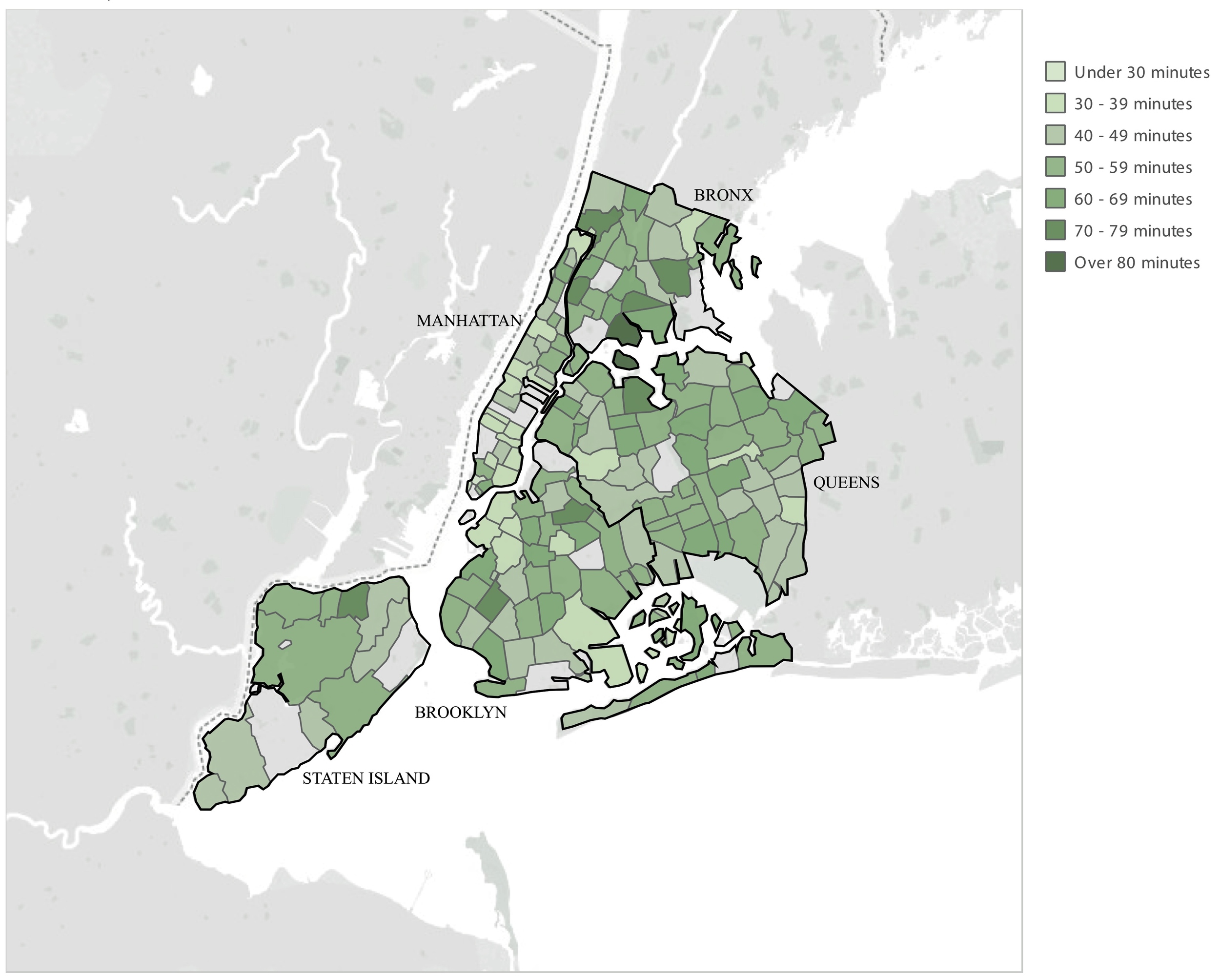
Proximity. Average Commute by Public Transport - Source: 2009-2013 American Community Survey
Public transportation plays an important role in the lives of New Yorkers. Throughout the city, 73 percent of all housing units are located within a half-mile of a subway or rail station entrance (about a 10 minute walk). Although New York City has the most extensive public transport system in the country, not every resident lives near a subway or bus stop. While average access to jobs by public transit is high, differences among neighborhoods are still significant: as the city grows, higher housing prices push low-income New Yorkers to neighborhoods far from job centers, which worsens these differences. The data show that there is a correspondence between the values of housing affordability, the percent of usage and the mean travel time of commuting. In fact, the neighborhoods that have the lowest number of rent-burdened households are also the ones with the best commuting time and some of the highest percentage of usage. It means that the public transport service has a good level of coverage and it is able to meet the needs of the resident households on the commuting to work. On the other side the neighborhoods with the worst level of affordability still present a high percentage of usage from the local inhabitants, which often corresponds to the lowest income range of households who can't afford the expenses of a private means of transportation, but the highest mean time of commuting shows that the areas are poorly served by the subway or buses. Living in close proximity to transportation and employment opportunities makes it easier for individuals to find and maintain jobs. Improving public transit access to jobs is one of the key approaches to growth and to a greater equality of housing accessibility.
Safety
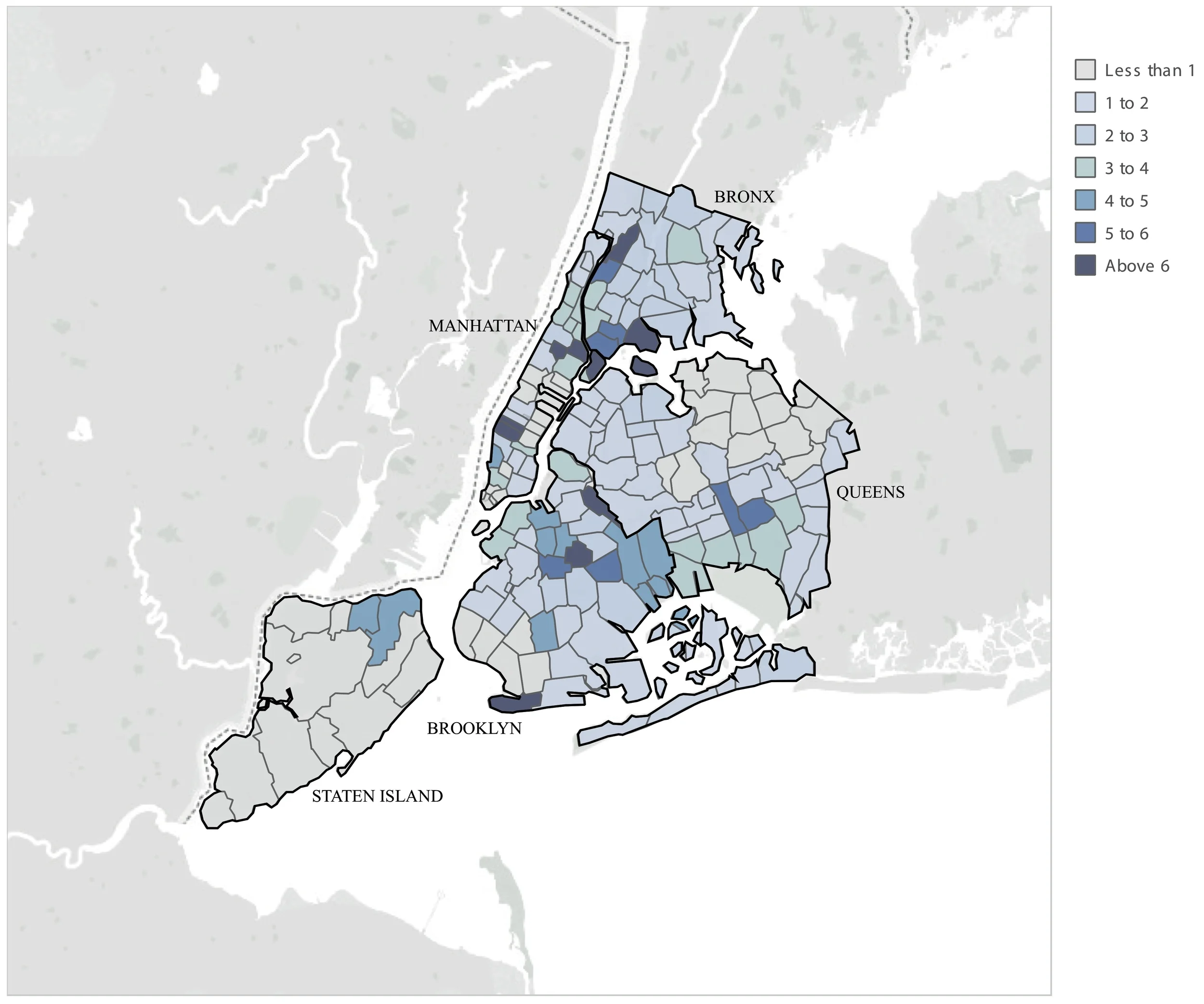
Safety. Crime rate per 1000 population - Source: The New York City Police Department (NYPD)
According to the Federal Bureau of Investigation’s (FBI) Uniform Crime Reporting Program, New York City is the safest big city in the United States, in fact New York City’s serious crime rate decreased significantly between 2000 and 2013. There were an estimated 367,9 violent crimes per 100.000 inhabitants in 2013, a rate that declined 5.1 percent when compared with the 2012 estimated rate. Violent crime rates fell in nearly every neighborhood in New York City: the city’s lowest income households (earning $20,000 or less) experienced the largest reductions in crimes per 1,000 residents from 2000 to 2013, but wide variation across neighborhoods remains. The data show that some neighborhoods, especially the Bronx, still have a high number of crime rate, which range from 5,73 to 26,71 major felony offense each 1000 persons. Most of these areas coincide also with the ones that have a higher percentage of rent-burdened households and with some of the highest time of commute neighborhoods, which are never under 50 minutes. The only exception is the neighborhood of Chelsea and Clinton in Manhattan, that include the area of Times Square and which rank is 6,61 major crime because of the great number of grand larceny suffered mainly by tourists. Personal safety and the threat of crime and violence are the uppermost in the minds of urban residents and are crucial in making a city an appealing place in which to live and work. Lack of personal safety is seriously detrimental to freedom, mobility, productivity and public interactions, which are all crucial to high quality of life and can heavily impact on housing accessibility.
The need for Strategic Urban Planning
“Rapid urbanization and the related growing demand for housing are creating pressure on the housing market and social tensions are expected to increase. The shortage of affordable housing not only contributes to social exclusion, it can also threaten to destabilize the wider economy if the housing price increase fuels property bubbles. Making housing more accessible, affordable and adequate for urban dwellers is therefore of critical importance. An accurate city planning, effective policy making and good governance are crucial elements to equitably distribute the benefits of urban growth”
Over the last decades, several New York mayors tried to solve the housing crisis with different methods, from the renovation of rundown buildings, to subsidize rents and the construction of more affordable housing giving the developers incentives to include affordable units in the new buildings, but even so the housing affordability crisis appears to be growing. The current city’s Mayor Bill de Blasio has made affordable housing a top priority of his administration and has committed New York City to “build or preserve nearly 200,000 affordable units, and help both tenants and small landlords preserve the quality and affordability of their homes.” (Glen 2014, 30-31)
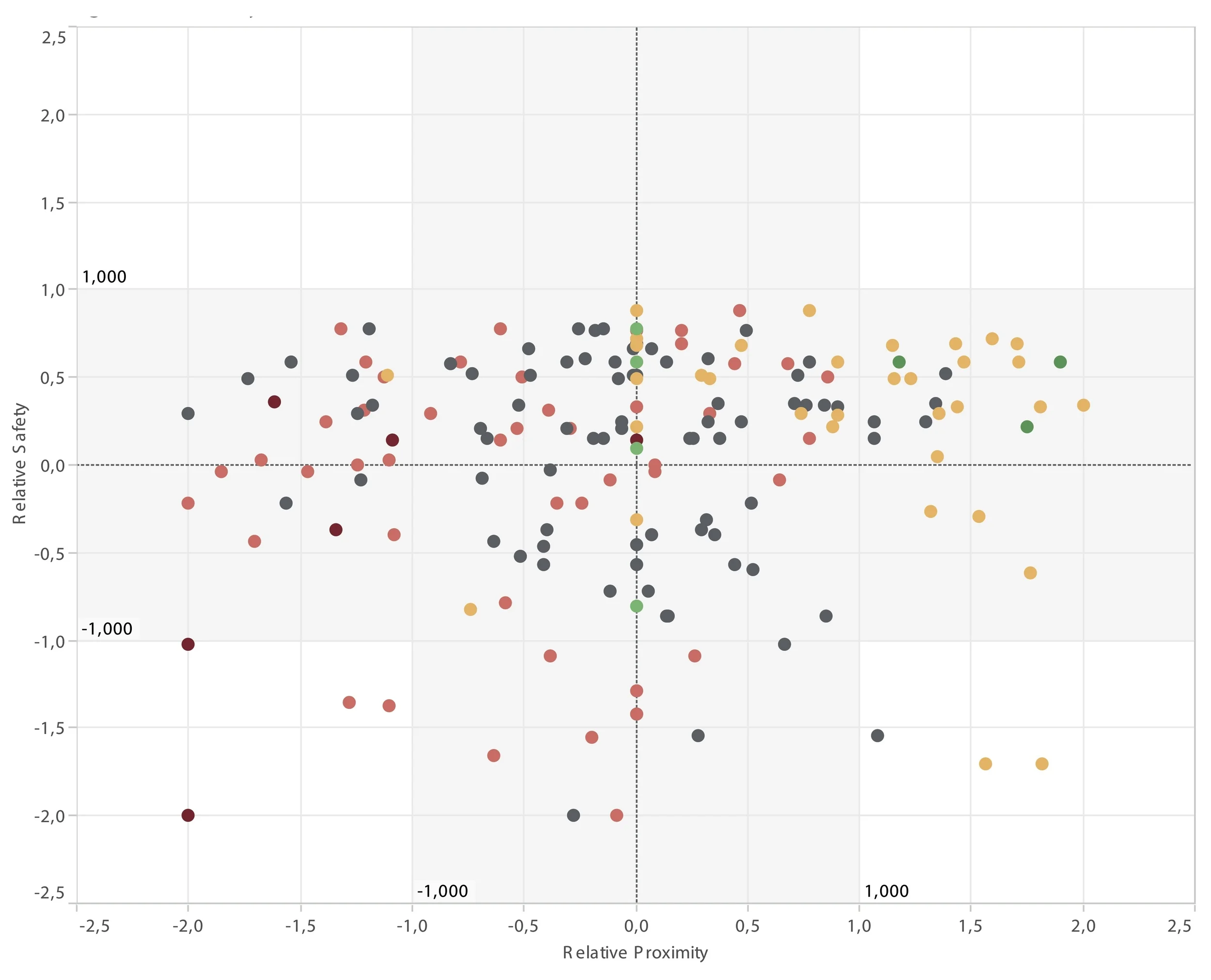
Housing Accessibility Matrix
This method provides a solid base of map-localized data evidences that could be the starting point for the definition of a strategic urban planning and policy making.
“When urban development strategies make of equity a guiding principle, efficiency is enhanced and social inclusion is strengthened. Equity in development contributes to expand opportunities and increase the civic engagement; a deeper and more sustainable growth is promoted through the creation of equal life chances and equal concern for people’s needs”
It suggests that urban planning and public policies should give priority to the most critical areas such as Hunts Point and Mott Heaven, Port Richmond and Flatbush, in order to allow all the members of the society to enjoy the urban goods, public services and opportunities without being excluded or marginalized for where they live. The process of fair distribution to achieve urban equity must take into consideration the important differences within each borough and neighborhood in addressing and improving the level of accessibility to housing through the indicator that have been defined. It would mean that within a general and cohesive city plan, also tailored and ad hoc initiatives and solutions have to be included to effectively tackle the problem of housing accessibility. Recognize and acknowledge that spatial inequalities are caused by a variety of different reasons and factors is fundamental in the process of urban planning.
Bibliography
Dempsey, N., Bramley, G., Power, S. & Brown, C. (2009). The Social Dimension of Sustainable Development: Defining Urban Social Sustainability. Sustainable Development, 19, 289-300.
Glen, A. (2014). Housing New York: A five-borough, ten year plan. The City of New York, nyc.gov/housing
Harvey, D. (2008). The Right to the City. New left review 53, 23-40
Moreno, E. L. (2014). Construction of more equitable cities. Public policies for inclusion in America Latina. Nairobi: UN-Habitat
New York City Government (2015). #OneNYC. A Plan for a Strong and Just City,
Rawls, J. (1971). A theory of justice. Cambridge, Mass: Belknap Press.
UN-Habitat (2014). Urban equity in Development - Cities for life, Draft Concept Paper. World Urban Forum, Medellin
